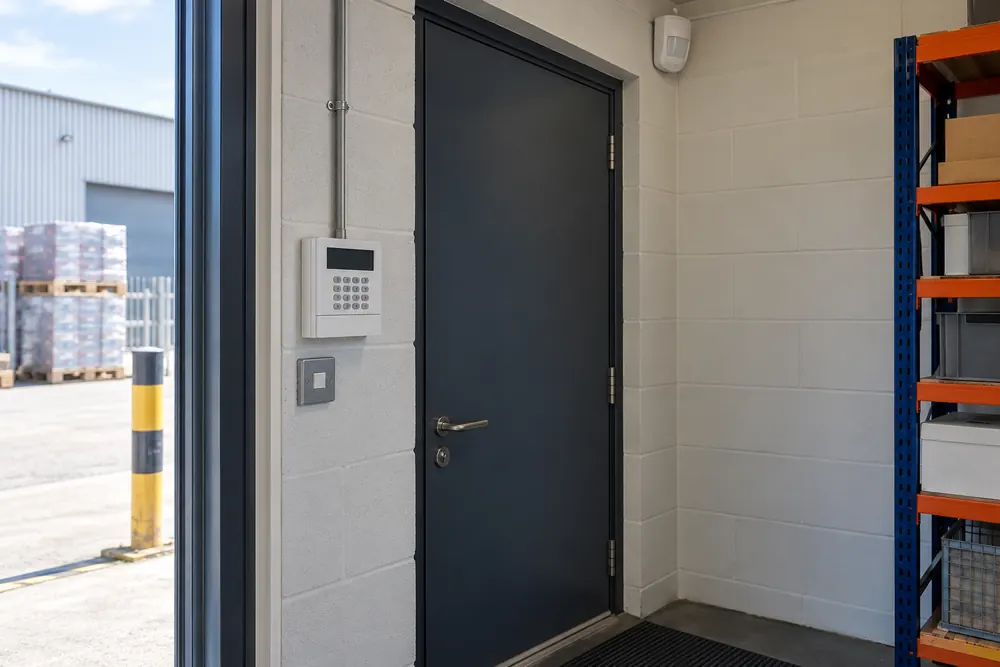
Start With Risk And Operating Hours
Intruder alarm installation in Leicester should begin with the way your premises are occupied and the risks your business needs to address. A warehouse used in shifts requires a different setting routine from an office that closes at the same time each evening.
We help scope detection, control and signalling for business premises. Include insurer requirements at the start, particularly if your policy specifies a grade, certification or monitoring condition. A quote prepared without that information may not meet the conditions you have agreed with your insurer.
Identify who opens and closes the building, which areas remain occupied and whether cleaners or contractors attend after hours. These details affect zones, entry routes and user permissions. A workable routine is a major part of reducing avoidable activations.
Detection And System Choices
Door contacts can detect the opening of a protected entrance, while movement detectors monitor selected internal spaces. Device selection should account for heating, machinery, changing temperatures and the physical layout. The design should explain which risk each detector is intended to address.
Wired, wireless and hybrid systems each have practical uses. Existing cable routes can support a wired upgrade, while wireless devices may reduce disruption in an occupied building. Wireless designs still need a proper radio survey, battery management and equipment suitable for the specified risk.
Separate areas can allow one part of a building to remain set while another is occupied. Staff permissions should reflect actual responsibilities, with a clear process for removing leavers. Shared codes make it harder to establish who set or unset an area.
Standards, Insurers And Police Response
The BS EN 50131 series and the UK application scheme PD 6662 are relevant references for commercial intrusion systems. The required grade and installation specification should be agreed from the risk assessment and insurer conditions. Ask the proposed installer to state the applicable current standards in writing.
A monitored alarm is not automatically eligible for police response. Certification, compliant confirmation arrangements, monitoring and local police registration requirements must be checked. BS 8243 addresses systems designed to generate confirmed alarm conditions.
The BIBA purchaser guidance explains why insurance conditions and installer selection matter. We make no claim to an inspectorate approval on this website. Verify the actual installer’s scope of certification and your insurer’s acceptance before instructing work.
Monitoring Needs A Response Procedure
An audible system raises an alert at the premises. A self-managed notification sends information to your nominated users, who must be able to act on it. A professionally monitored system sends signals to an alarm receiving centre under an agreed service arrangement.
Monitoring should specify who is contacted, how an event is checked and what happens if a keyholder cannot be reached. Agree the signalling path, backup arrangements and treatment of communication failures. Recurring monitoring charges and contract terms belong in the written quotation.
Review any existing communicator before changing broadband, telephone or mobile services. A connection that appears to work for ordinary calls may not meet the alarm’s signalling requirements. Arrange a controlled signalling test after a service change.
Survey, Installation And Handover
First, review the building layout, occupation pattern and insurance requirements. Mark proposed detection and set areas on a plan. Agree installation access, any temporary protection needed and how staff will enter while work is in progress.
After fitting and programming, test detection, entry and exit routines, tamper reporting and the agreed signalling arrangements. Teach users how to set, unset and recognise faults. Handover should include the final zone list, user guidance and the arrangements for maintenance.
Cost depends on detection scope, cabling, signalling, existing equipment and the service contract. Include any need for CCTV incident verification or door access management in your initial brief. Tell us about the premises and any insurer requirements.
Your Questions, Answered
Do We Need A Monitored Intruder Alarm?
A monitored intruder alarm may be appropriate if your insurer requires it or your business needs an agreed response outside occupied hours. Monitoring should be selected around the risk and available keyholders. Compare signalling options, recurring charges, response procedures and contract terms before choosing between audible, self-managed and professionally monitored arrangements.
Does Alarm Monitoring Guarantee Police Attendance?
Alarm monitoring does not guarantee police attendance. Eligibility depends on the installation, certification, confirmation, receiving centre and police registration arrangements, while actual attendance depends on police policy and operational priorities. Ask the proposed provider to explain your system’s status in writing and keep keyholder details and maintenance arrangements up to date.
Can An Existing Alarm Be Upgraded?
An existing intruder alarm can sometimes be upgraded after the panel, detectors, wiring and signalling are inspected. Supported equipment may be retained if it suits the agreed design. A takeover should establish the configuration and ownership of accounts, identify unresolved faults and confirm that any insurer or monitoring requirements can be met.